Konzerthaus Berlin - Werner-Otto-Saal
modern art ensemble
Concert
Gendarmenmarkt, 10117 Berlin
„a cosmos of sounds“
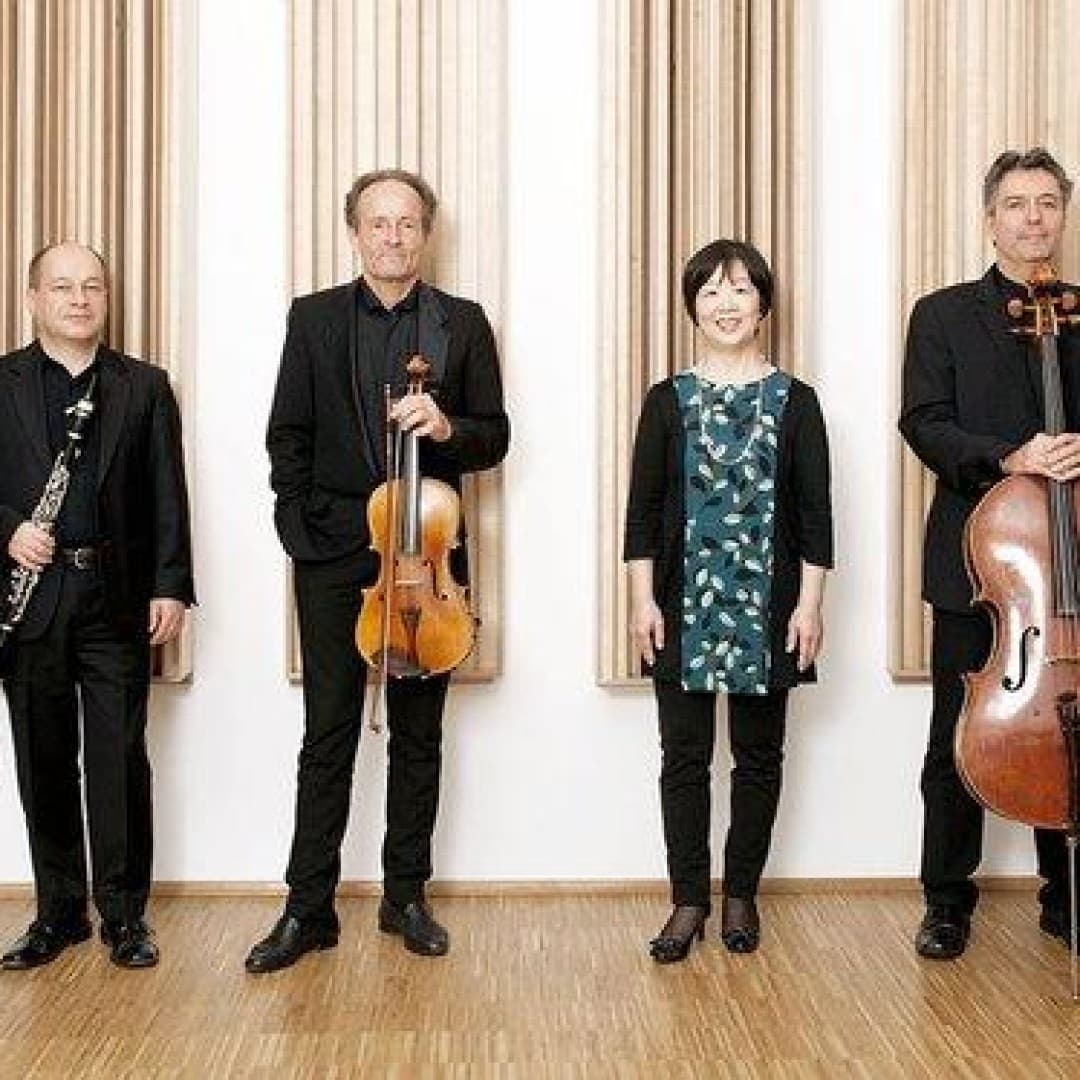
© Henrik Jordan
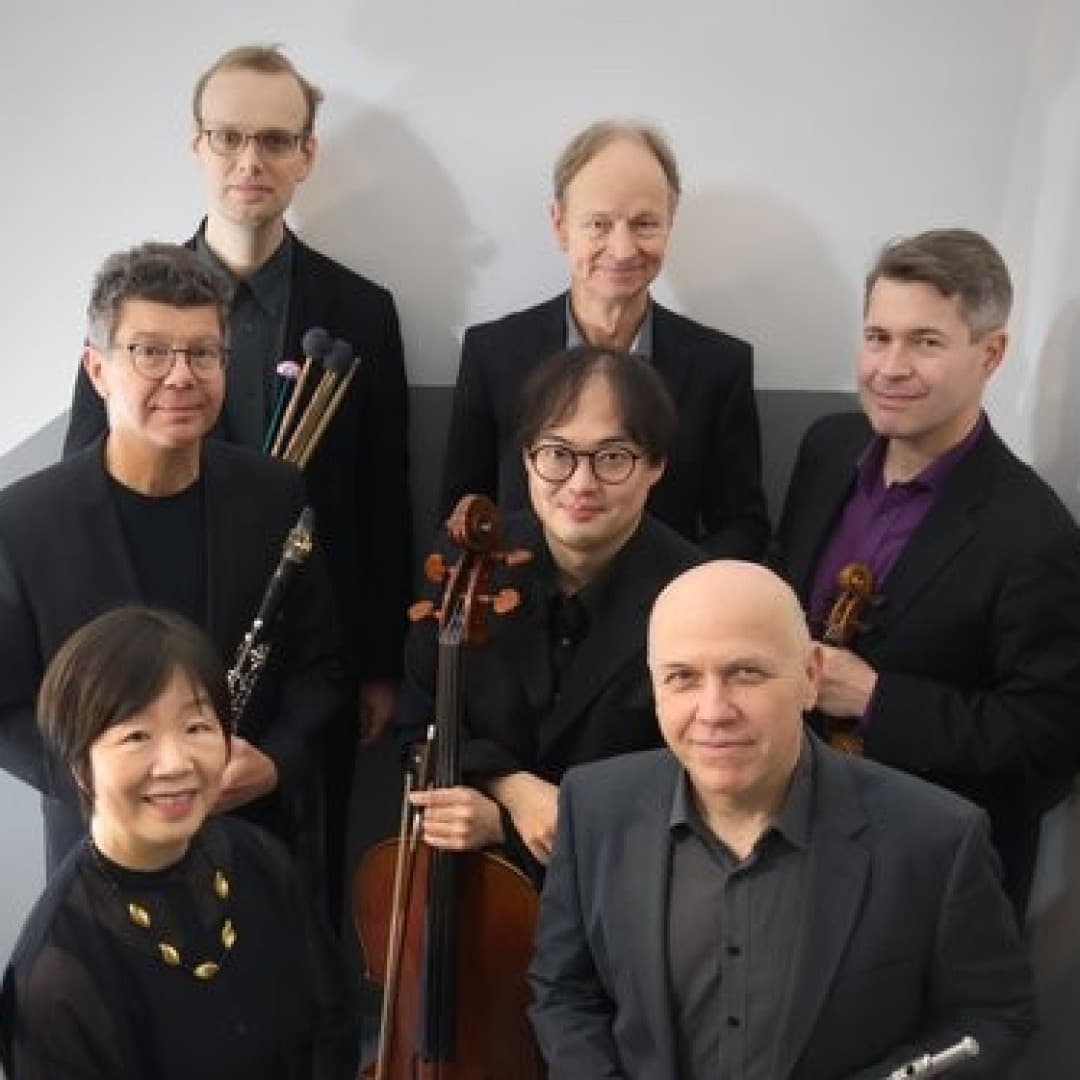
© Risa Kusumoto
Concert program
Sergej Newski
„Incidents“ für Flöte, Violoncello, Akkordeon und Klavier
Rebecca Saunders
„Stirrings Still I“ für Flöte, Oboe, Klarinette, Percussion und Klavier
Sidney Corbett
„Gesänge der Unruhe“
Sextett
Pause
Michael Quell
„String III – Branes“ für Violine, Akkordeon und Klavier
Chaya Czernowin
„Fast darkness III
moonwards“ für Flöte, Klarinette, Violine, Viola, Violoncello und Klavier
„Incidents“ für Flöte, Violoncello, Akkordeon und Klavier
Rebecca Saunders
„Stirrings Still I“ für Flöte, Oboe, Klarinette, Percussion und Klavier
Sidney Corbett
„Gesänge der Unruhe“
Sextett
Pause
Michael Quell
„String III – Branes“ für Violine, Akkordeon und Klavier
Chaya Czernowin
„Fast darkness III
moonwards“ für Flöte, Klarinette, Violine, Viola, Violoncello und Klavier
Description
Every sound can be a universe. And the universe can become a metaphor for composing. Its boundlessness is an image of the richness and inventiveness of composers, but also of the space in which the visions of sounds develop. Based on this idea, the modern art ensemble has conceived a concert evening in which sounds conquer their own spaces and materialize in a wide variety of ways.
Sergej Newski's “Incidents” deals with suddenly appearing (sound) events which, separated from each other, can be interpreted in a variety of ways: as sudden vibrations or as human actions, as incidents that happen without warning, as omens, as aftershocks.
In “stirrings still I” for five instrumentalists distributed throughout the room by Rebecca Saunders, sounds materialize as if by themselves, creating surprising connections and exploring the resonances and colors of the concert hall.
Sidney Corbett traverses the ensemble's tonal and emotional extremes in “Gesänge der Unruhe” (Songs of Unrest). His piece fills the entire range of tones through the use of bass and E-flat clarinet, bass and piccolo flute, celesta, and the rich timbres of the strings and piano, its structures fluctuating between rhythmic patterns and lyrical melodies. A multi-layered composition based on Fernando Pessoa's “Book of Disquiet,” in which the author describes his loneliness amid diverse personal and social connections.
Michael Quell explores one of the current theories about the cohesion of the universe in “String III- Branes.” According to string theory, currently the only physical theorem capable of unifying all four elementary forces (electromagnetism, strong and weak nuclear force, and gravity), all particles of matter and all interactions can be traced back to the smallest one-dimensional building blocks, the “strings,” which can best be imagined as tiny vibrating threads.
The concert concludes with Chaya Czernowin's “Fast darkness III -moonwards,” a haunting and radical new work by one of the most important composers of our time about darkness and our journey into it.
Sergej Newski's “Incidents” deals with suddenly appearing (sound) events which, separated from each other, can be interpreted in a variety of ways: as sudden vibrations or as human actions, as incidents that happen without warning, as omens, as aftershocks.
In “stirrings still I” for five instrumentalists distributed throughout the room by Rebecca Saunders, sounds materialize as if by themselves, creating surprising connections and exploring the resonances and colors of the concert hall.
Sidney Corbett traverses the ensemble's tonal and emotional extremes in “Gesänge der Unruhe” (Songs of Unrest). His piece fills the entire range of tones through the use of bass and E-flat clarinet, bass and piccolo flute, celesta, and the rich timbres of the strings and piano, its structures fluctuating between rhythmic patterns and lyrical melodies. A multi-layered composition based on Fernando Pessoa's “Book of Disquiet,” in which the author describes his loneliness amid diverse personal and social connections.
Michael Quell explores one of the current theories about the cohesion of the universe in “String III- Branes.” According to string theory, currently the only physical theorem capable of unifying all four elementary forces (electromagnetism, strong and weak nuclear force, and gravity), all particles of matter and all interactions can be traced back to the smallest one-dimensional building blocks, the “strings,” which can best be imagined as tiny vibrating threads.
The concert concludes with Chaya Czernowin's “Fast darkness III -moonwards,” a haunting and radical new work by one of the most important composers of our time about darkness and our journey into it.
Cast
modern art ensemble
Konzerthaus Berlin - Werner-Otto-Saal
Gendarmenmarkt, 10117 Berlin
To enable Google Maps please accept functional cookies.